Monday, 9 September 2013

Romulus


Romulus FC is a non-league football club whose origins come from North Birmingham. The club was formed in 1979 by Roger Evans, Peter Fleet, and Ken Powell, along with several parents, for the best youngsters in the area to play Sunday football at Penns Lane in Sutton Coldfield.

Players such as Dean Sturridge, Luke Rogers, Darius Vassell, and Zat Knight represented Romulus at the junior level, while senior football was introduced to the club. The youth structure continued to provide players for the men who went on to succeed in the local Sunday setups.


A switch to the Midland Combination and Saturday football was made for the 1999-00 season under player boss Richard Evans. Success continued as promotion to the Premier Division was sealed at the first attempt, with Romulus being based at Vale Stadium, in the Castle Vale area of Birmingham. 

In 2003-04, the 'Roms’ were crowned as Midlands Combination champions, earning a promotion to the Midland Alliance. Around this time, with another promotion on the horizon, Romulus moved into Coles Lane to share with Sutton Coldfield Town.
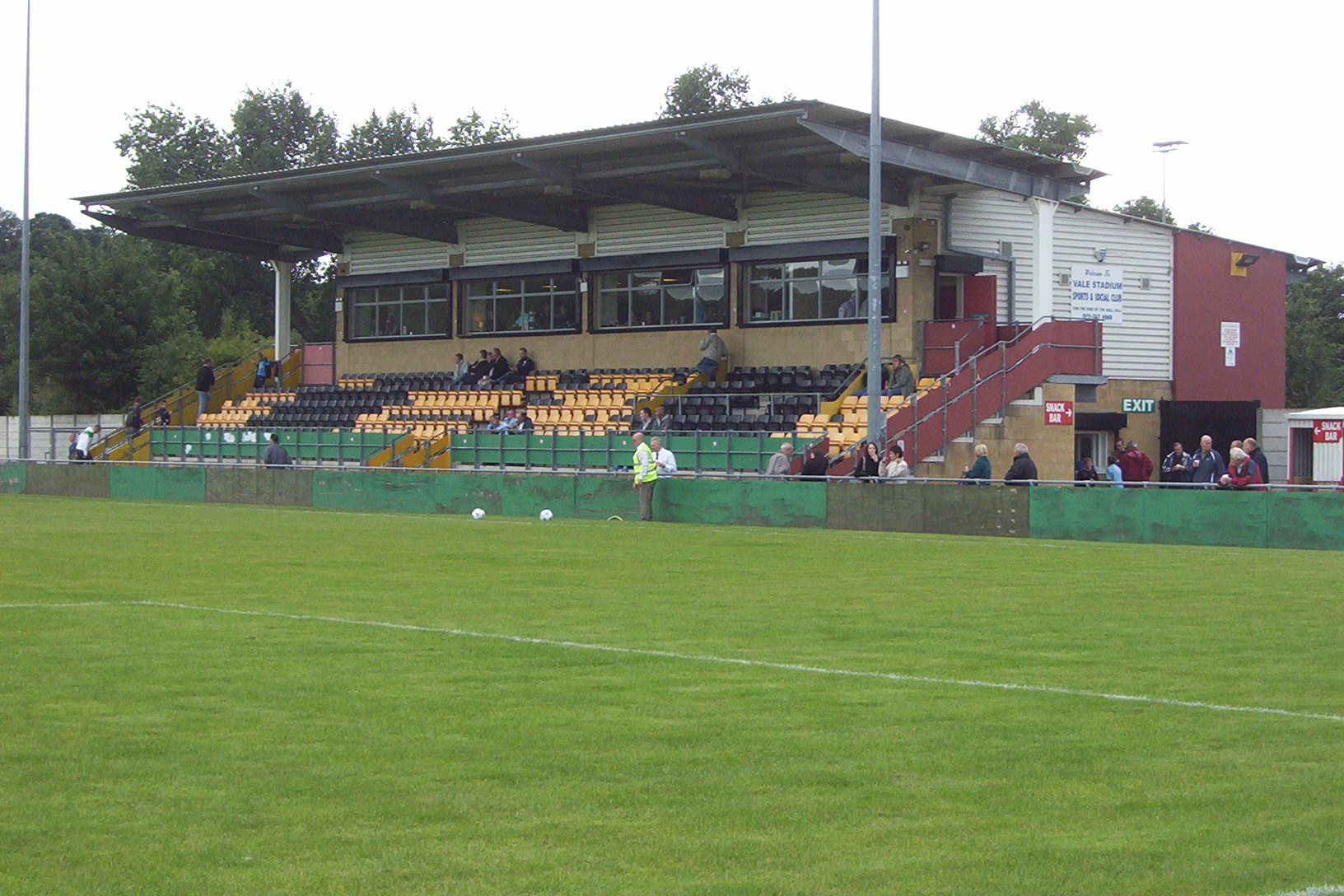
The club's former Vale Stadium home


After finishing as runners-up in 2006-07, Romulus were promoted to the Southern League Division One Midlands. After three mid-table finishes, the club was transferred to the Northern Premier League Division One South for the 2010-11 campaign.

After a decent opening season, the Roms struggled in the next two campaigns before settling into mid-table positions for several successive seasons. Experienced manager Neil Tooth assisted the side, which finished bottom of the table in 2017-18 and was relegated to the Premier Division of the Midland League.


This prompted a return to Vale Stadium with Mark Swann being appointed as manager in November 2018. He departed a few months later. Jason Lanns arrived to take over the position in July 2020. He was later succeeded by a returning Tooth to take over a side that finished sixth on the table.

The club announced a return to Coles Lane in Sutton Coldfield for the 2024-25 season, which was rebranded as The Dominos Arena. In September 2024, new joint bosses George Evans and George Ballinger took over after Tooth's resignation.

Romulus FC will play in the Midland League Premier Division in the 2026-27 season.

My visit

Coles Lane, Sutton Coldfield

Romulus 4 Scarborough Athletic 2 (Saturday 7th September 2013) Northern Premier League Division One South (att: 171)


After going up to Scarborough the previous week and seeing them dismantle Ashington in the FA Cup, I headed for Sutton Coldfield in an optimistic mood. I’d only had a few hours of shut-eye after a night shift, but the sun was shining, and the train ride was comfortable.

My mood darkened at Birmingham New Street station as my scheduled train simply didn’t turn up, despite the insistence that it had from the platform assistant. I wasn’t the only mystified customer. Despite this, I was at my destination just past 2pm with my football accumulator placed on my iPhone.


I saw a couple of familiar Boro fans at the station, but I went on ahead in search of the ground. There was something special about wandering through a town I hadn’t previously visited, as I took in the shopping precinct while following directions closely. 

Romulus attracted double-figure gates, and with a large Seadog following, I expected, in addition to it being Non-League Day, I expected a larger crowd, so I wanted to secure a programme. After paying my £7 admission, along with an extra quid for a very basic programme.


I surveyed the scene as I walked around behind the goal to the clubhouse. Anyone wanting to read a full description of Coles Lane, the Sutton Coldfield Town page will accommodate you. My old pal Fred Firman was sitting inside the bar with several other away fans. 


We had a pint of Greene King Revolver, which was of dubious quality, before heading out as the teams were in readiness for kick-off. We decided upon a seat in the stands. We were amused by the posters around the ground for the game, advertising the visit as Boro was a former 'League' club.

The view was terrific as we looked down on the action. The artificial 3G pitch appeared to slow the game down, as the ball kept low and held up from through passes. Romulus had got off to an excellent start to the season and were obviously used to the surface.


This was especially noticeable when they took the lead in fifteen minutes. A ball looked to be heading for a goal kick, but a Roms forward crossed for Luke Keen to head home. This was a bit harsh on Boro, who were equal to Roms, even if they were missing the cutting edge that had undone many a defence in the previous season.

Eventually, Scarborough were rewarded just before the interval when Gary Bradshaw fired home James Bennett’s wayward effort. The consensus at the break was that it was a fair scoreline and all was to play for. 

Sustenance by the way of a sensibly priced hot dog with onions at £1.50 and a quid for a cup of tea was taken on board as we went down the far side. This is where the majority of the Seadog fans were assembled. They must have numbered around 130, which was very impressive for the distance involved.


Romulus went back into the lead when a scuffed shot was turned in by an even weaker effort by the impressive Marcus Brow, who seemed to wrong-foot Jason White in the Boro net. Despite this, all was to play for. The home goalkeeper, Matt Coton, was perhaps lucky that the referee was in a generous mood soon after. 

He was penalised for holding the ball too long in his hands. As a Boro player tried to grab it to take a quick free kick, Coton kicked it away. It could have easily resulted in two yellow cards, but the officials settled for a caution for the relieved custodian.


Boro’s misery was confounded as Brown walloped in another while on the run with twenty minutes to go, with heavy rain beginning to fall. Roms made it four eight minutes later as the visiting defence was outdone for pace, not for the first time.

An exposed White had to come out to try and thwart another attack, leaving Tyrone Amory to slot into an empty goal. Boro boss Rudy Funk had once again rung the changes to try and get some attacking impetus for his team.


Frankly, they looked one-paced and were set up with leading scorer Ryan Blott stuck out wide. Admittedly, the team was in their relevant infancy together, but the system was not working. The only discernible tactic appeared to have midfield maestro Bryan Hughes trying to pick out remote, static, and marked colleagues in forward positions.

In a show of defiance, centre-back Paul Foot was sent up front. Roms packed their defence, but at least Boro panicked them a little at last. Skipper Foot headed home in the last minute of normal time as Boro continued to press. 


It was the urgency that appeared to be missing for long periods of the encounter, but in the end, it was too little, too late. Thankfully, torrential rain had subsided before the end. While waiting for Fr, II stood below the open window of the away team dressing room.

It’s fair to say that it was hurting the team as much as us fans. I said my goodbyes and bumped into a friendly home official outside who was most gracious in victory and complimentary about the Boro support. 


As I boarded the 5.20 train, I thought my luck was changing. My first six results on my football bet had all come in. I quickly searched Twitter, knowing that a Margate victory at home to Leiston would net me over £195. In true form, the game had ended 1-1.

After a walk around the much-improved Birmingham city centre, I boarded the 6.10 back to London. I saved some time by getting off at Watford Junction to take a train to Wembley Central and then a bus home. I was indoors by 8pm for some additional sleep after the one I’d had on the way before my night shift.
                                                      

It had been a disappointing day, but I was able to put it into perspective after the awful news the day before of a friend and former colleague taking his own life at a tragically young age. I had tomorrow to look forward to. RIP, Big Dan.


Thursday, 22 August 2013

Chester City


Chester City FC was a professional football club formed in 1885, originally as Chester FC. The club eventually folded in 2010 after a very eventful history of successful cup runs and atrocious ownership in their latter years.

Chester’s first competitive football came in 1890 as a founder member of The Combination. The club lifted the Welsh Cup in 1908 and the league title the season after, before joining the Lancashire Combination in 1910. They remained there until the outbreak of World War One, but once peace was retained they became founder members of the Cheshire League.

After being crowned as champions three times as well as also finishing runners up on one occasion, ‘The Seals’, to use one of their nicknames, were invited to join the Football League Division Three North for the 1931-32 season. They celebrated by winning their second Welsh Cup the season after.


After World War II, a third Welsh Cup was lifted in 1946-47, but nothing of note was outstanding in league performances. Indeed, Chester were placed in Division Four following League restructuring in 1958. The 1964-65 and 1970-71 seasons saw narrow misses for promotion, but their moment in the headlines was just around the corner.

The 1974-75 season saw Chester go all the way to the semi-final of the League Cup after Walsall, Blackpool, Preston North End, Leeds United, and Newcastle United were all defeated. Aston Villa were held 2-2 at Sealand Road in the first leg of the semi-final, before Villa won the second leg 3-2. Consolation came by the way of promotion to Division Three.

The cup competitions obviously suited the 'Blues’ as 1976-77 saw them reach the fifth round of the FA Cup, where Wolverhampton Wanderers went through by a solitary goal at Molineux. In 1979-80, under the stewardship of former Manchester City star Alan Oakes, Chester reached the same stage once more. This time Ipswich Town ended their run at Portman Road. Starlet striker Ian Rush scored goals for the club around this period.


In 1982, Chester found themselves in the League basement once more, changing their name to Chester City the following year. Astute manager Harry McNally, along with the goals of Stuart Rimmer, sent City back to Division Three at the culmination of the 1985-86 season. On a limited budget, McNally nearly led the side to the playoffs, but hard times were about to hit the club.

An Edinburgh-based consortium took over the financially troubled club and announced that they would be selling Sealand Road for retail development at the end of the 1989-90 campaign. A groundshare was arranged at Moss Rose, Macclesfield, until a new stadium was built in the city.

Graham Barrow performed wonders keeping his side up in the renamed Division Two, before the club returned to Chester and their new Deva Stadium home in August 1992. Unfortunately, the move home also resulted in relegation, although the team went straight back up at the first attempt.

My drawings of Sealand Road and the Deva Stadium
along with club crests and team kits.
Click on the images to enlarge them.


In 1995, City once again found themselves in Division Three. They reached the play-offs in 1996-97, but Swansea City defeated them in the semi-finals. Mark Guteman was the owner around this time, as the club entered into Administration in October 1998, as Kevin Ratcliffe tried to steady things on the pitch.

American Terry Smith bought the club in July 1999, with many unconventional ideas from his time in American Football. Ratcliffe resigned, so Smith made himself boss. After a woeful start in his role, Ian Atkins was appointed to oversee team affairs. However, the team was relegated from the League at the end of the season to the Conference.

In the summer of 2001, Gordon Hill became the new manager in an unpopular move as City were close to going out of business, while the loyal fans despaired. They rejoiced in September 2011 as the club was sold to a new owner, but how little they knew what was to come.


Stephen Vaughan, a boxing promoter from Liverpool who had once owned Barrow FC and taken them to the brink of closure, bought the club and appointed former England centre-back Mark Wright as manager. In 2002-03, City missed out on a return to the Football League as Doncaster Rovers denied them after a penalty shoot-out in the play-off final.

The following season saw Chester City win the Conference and return to the League, but Wright resigned before the start of the next campaign. Ian Rush took over, but his spell only lasted until April 2005, when Keith Curle took over. Curle’s spell ended when Wright returned for a second spell at the helm. In April 2007, Bobby Williamson became the latest boss to enter through what must have felt like a revolving door.

Williamson lasted eleven months. During his spell, Vaughan arranged for a minute's silence to be held before a game for a man who had been murdered and had links to criminal activity in Liverpool. The Scots manager was replaced by coach Simon Davies and then Wright, who was taking his third bite of the cherry. 

This time, Wright’s spell ended in disaster as City were relegated back to the Conference in May 2009. By now, the supporters were more than a little upset with the goings on at the Deva Stadium, which included news of Vaughan appearing in court on fraud and deception charges.


This was exacerbated in the summer of 2009 when Vaughan put the club into Administration with staggering debts of £7 million, which included £5.5 million owed to Vaughan’s investments. By then, the club's shares had been transferred to Stephen Vaughan Junior, the ex-owner's son and a player at the club. The Conference imposed a ten-point penalty on City, which was soon increased to twenty-five after further financial irregularities came to light. 

Mick Wadsworth was appointed as team manager. Creditors agreed to a package put forward by the Vaughan family. It was thought that new owners had been found in early 2009, but the deal fell through. A new buyer was found in May 2009, when the Vaughan family formed a new company to buy out City. The FA initially blocked the deal, which put the Conference in a very awkward position. 

Eventually, City started their season after everyone else. After a poor start, Wadsworth was replaced by Jim Harvey. Dwindling attendances and pitch protests led to a cut of the squad after Harvey had made an initially promising start. Harvey was dismissed in January 2010 to be replaced by the new Director of Football, Morrell Maison. A gate of just 518 saw City go out of the FA Trophy to Fleetwood Town. 


The final game was a 2-1 home defeat to Ebbsfleet United. The team was scheduled to play away to Forest Green Rovers on Tuesday, 9th February. There was confusion about whether the coach company or the players refused to go to the game. Neither had been paid, and the fixture was not fulfilled. 

The Conference initially suspended them to offer an opportunity for the owners to answer the offences that were accumulating and to sort out the finances. City were expelled following a general meeting of all member clubs on the 26th February 2010. The club was wound up in court on the 10th March 2010.

Fortunately, for football supporters in the city, the supporters group City Fans United formed a new Chester FC and convinced the local council that they should be given use of the Deva Stadium for the 2010-11 season to compete in the Northern Premier League Division One North

My visits

Sealand Road

Chester City 0 Walsall 0 (Saturday 1st November 1986) Division Three (att: 2,872)

My visit to Sealand Road came courtesy of my Cardiff City-supporting mate, Gary Griffiths. We had been to Halifax Town v Cardiff the previous evening and had spent the evening in Levenshulme in Manchester, staying at some former student friends of his. An enjoyable ride to Deeside via Stockport and then Northwich ensued before we parked up near the ground by the greyhound stadium, which was awaiting demolition.


It is fair to say that the ground was no thing of beauty. The Main Stand towered over the ground with its raised seating deck and large wall in front. A large detached area of flat standing stood in front of it, which was where the old wooden stand once stood. 

We were in the Sealand End behind the goal, which was a smallish-sized covered terracing with a low roof. The Popular Side was to our right. It was not dissimilar to where we were standing. Finally, the scruffy-looking open Spion Kop at the far end contained the visitors from the Black Country.

We’d taken a poor option in hindsight, as the view wasn’t the best, but transfers weren’t allowed once we’d entered the ground. The match in the third tier wasn’t too action-packed from memory, but a young David Kelly stood out for Walsall.

Deva Stadium

Chester City 4 Scarborough 1 (Saturday 12th March 1994) Division Three (att: 2,822)

It was in the good old days of minibus travel as I got on board with Bunner and the older boys before my role as organiser. Scarborough didn’t have a fantastic team at the time, even though Steve Wicks was then turning on the style at times, but City were destined for promotion. 

We stopped for beers in a pub dominated by older blokes watching racing on TV, who only allowed the jukebox a bit louder between races. As ever, we cut it fine as the alcohol seemed more appealing than the match. We eventually made our way through the Saturday traffic and down Bumpers Lane to the ground at bang on kick-off time.

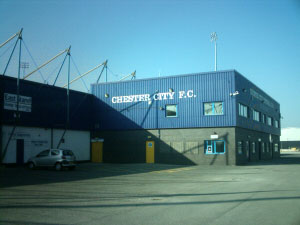
It turned out to be a bit of a waste of time rushing, as it transpired. Boro were blown away by a very competent Chester outfit. Deva Stadium was neat enough but lacking atmosphere with its open corners and small stands. All were covered. Each end had terracing, the Main Stand was to our right, with the smaller West Stand opposite.


An unusual feature of the Deva Stadium was that the pitch was actually in Wales, but the Main Stand was in England. We had fun reminding the home fans of that. References to Subbuteo stadiums were also made. The highlight of the ninety minutes, apart from Jason White's consolation goal, came when a Seadog must have been pushed to the limit by some gobby kids and Boro’s hapless showing. 

He piled into them and started brawling before walking around the pitch with a steward to await ejection, receiving plenty of cheers from us. As was the norm, the match was only a byproduct of a day with a mini bus crew. We went first to Pontefract for a couple of beers and food, before heading to the former mining town of Normanton. 

It really was in a sorry state, but the locals were always welcoming to us, hence it became a bit of a regular stop. We got home, tired, weary, and ready for bed just after midnight.


The images of Sealand Road on this page have been taken from the internet, as has the photo of the outside of the Deva Stadium. The photos inside are courtesy of Dave 'Bunner' Hunter, taken on a visit while in the away end with Scarborough.


Boreham Wood


Boreham Wood  FC is a non-league football club from the town in the south of Hertfordshire, twelve miles north of central London. The club was formed in 1948 as the town grew after the War had ended, when two local outfits, Boreham Rovers and Royal Retournez, amalgamated.


The new club participated in the Mid Herts League and the Parthenon League before joining the Spartan League, where they finished runners-up on a couple of occasions. In 1966, ‘The Wood’ moved into the Athenian League. By 1970, a couple of promotions saw Boreham Wood in the Premier Division, where they went on to be crowned champions in 1973-74.

This triumph led to the club becoming a founder member of the Isthmian League Division Two. Promotion followed within two seasons. Relegation came in 1982 back to the second tier, which by then was named Division One, for a spell of over a decade.


Eventually, the Wood found themselves back in the Premier Division following a victorious 1994-95 campaign. The team finished as runners-up in the league with FA Cup runs all the way to the Second Round in consecutive seasons. 

In 1996-97, Tring Town, Aylesbury United, Edgware Town, and Thatcham Town were beaten in the qualifying rounds before Rushden & Diamonds were defeated after a replay. Luton Town ended their run in their local derby. The following season's run saw wins over Rushden & Diamonds once more, and then Hayes before bowing out to Cheltenham Town after a replay.

My drawing of Broughinge Road, as Meadow Park was called in 1983,
along with various team kits. Click on the image to enlarge it.


By 2000, the club found itself demoted once more, but promotion was won at the first attempt. However, the fluctuation in form continued as The Wood found themselves back down in the Isthmian League Division One North following the 2002-03 season. 

In that era, under the chairmanship of Danny Hunter, the club had set up a full-time academy through PASE (Programme for Academic and Sporting Excellence) for sixteen to nineteen-year-olds to develop on a full-time basis.

Following non-league re-organisation, the club was placed in the Southern League Eastern Division ahead of the 2004-05 season. The change of scenery obviously worked as the team was crowned as champions in their first season, as well as reaching the semi-final of the FA Trophy, where Woking denied them over two legs.


The championship win led to a transfer back to the Isthmian League Premier Division, from where they were promoted under returning manager, the ex-Arsenal star Ian Allinson, in 2009-10 after victory over Kingstonian in the playoff final to Conference South.

After a few seasons of consolidation as the club grew, Wood reached the play-offs in 2014-15 after finishing runners-up. Havant & Waterlooville were defeated in the semi-final before a 2-1 victory over Whitehawk at Meadow Park earned the club a place at the elite of non-league football in the soon-to-be-renamed National League.

Allinson resigned as manager as the time required for the step up affected his outside work. Former club defender Luke Garrard took over the managerial reins before Allinson returned to the club in November 2015 as Director of Football to steady the ship.

Bruno Andrade top-scored in 2017-18 as the team reached the playoffs, defeating AFC Fylde and Sutton United to reach Wembley for a tie to reach the Football League against Tranmere Rovers, who eventually won 2-1 after being reduced to ten men after the first minute.

Wood returned in 2019-20, helped by the goals of Kabongo Tshimanga. This time Fc Halifax Town were defeated before Harrogate Town ended playoff dreams in the semifinals. The next stab at the playoffs came in 2022-23, where Barnet were beaten before Notts County won a dramatic semifinal tie.

However, the 2023-24 campaign was a very different story as Boreham Wood were relegated on the final day of the season. It had earlier been announced that long-serving boss Garrard would be leaving regardless. He was replaced by Ross Jenkins, before the former boss returned to lead his side to the playoffs 


Victories against Dorking Wanderers, Torquay, and Maidstone United in the 2024-25 playoffs sent Wood back to non-league's elite. Twelve months later, Wood reached the National League playoffs, defeating Forest Green Rovers and Carlisle United to reach the final against Rochdale, which ended in an agonising defeat on penalties after leading 2-0.

Boreham Wood FC will play in the National League in the 2026-27 season.

My visits

Boreham Wood 0 Cheshunt 0 (Tuesday 4th October 1983) Isthmian League Division One 


The town of Borehamwood played a big part in my life for the best part of a year. As a student at Scarborough Sixth Form College, I really didn’t have a clue what I wanted to do in the future. One day, I ventured to the careers office in Westborough to speak to an expert who listened to what I had to offer. He came to the conclusion that I may find a future career in Land Surveying & Cartography.

The only place that did the course was the De Havilland College in Borehamwood, so after interviews and finding lodgings, I found myself in the slightly underwhelming town where the BBC and Elstree Studios were based, and many films and TV series were shot.


My lodgings were nice enough, but I didn’t have a lot of time for the older couple whose house it was, or a fellow lodger. I looked for opportunities to get out and about as much as my meagre spending money would allow. Having had a look inside Broughinge Road, as the Meadow Park ground was called at the time, I decided it was time to go and see a game.

The ground was nothing too spectacular at the time. A small, low-seated Main Stand was on the park side with the clubhouse built into the back of it. The changing rooms were to the side. The far side had a pitch-length shelter protecting a few steps of terracing. That continued open behind both goals, with the Shenley Road End having a gap in the middle.


As I remember, the game was none too exciting either, but it was another new ground under my belt if nothing else. The Wood eventually finished the season in fifth place, while Cheshunt were relegated after finishing second from bottom.

Boreham Wood 1 Watford 3 (Monday 30th January 1984) Hertfordshire Senior Cup

Quite a good crowd assembled for this mid-season cup game under lights, with the visiting Hornets a decent side, with many going on to have good careers. I attended with Mark, the college librarian and Vicarage Road regular, who was a good pal to me. I remember taking photos on my very basic camera with a flash bulb, but none came out. 

The Watford line-up was as follows:  Eric Steele, Charlie Palmer, Lee Sinnott, Steve Terry, Nigel Gibbs, Neil Williams, Worrell Sterling, Richard Jobson, Gary Porter, Ian Richardson, Jimmy Gilligan. Sub: Francis Cassidy. The goals were scored by Gibbs, Jobson, and Porter.

Thursday 12th October 2006

An early finish from work saw me set out on a rainy Autumn day to take photos of several grounds in the north of the capital. After popping into the White Lion Ground in Edgware, before heading on the 107 bus to Borehamwood.


The ride along Shenley Road brought back memories, even if some of the cosmetics had changed. The biggest was where I got off the bus. A huge chunk of the Elstree Studios was now a Tesco superstore. On the other side of the roundabout was a McDonald's, which was once a pub that we used to go to at lunchtime from college.

I wandered round to the grounds entrance, which led to a car park separating the main ground and an artificial pitch on the edge of Meadow Park, where the youths partaking in the club's PASE scheme were just finishing off. The rear of the clubhouse had a cafe serving members of the public and passing motorists.


A gate was open in the corner of the ground. I explained to one of the coaches what I was doing. He was most hospitable. That corner of the ground had some cabins for the academy. Further down the touchline was a fine new seated stand from my previous calls. 

Apart from new barriers and some improvements in cosmetics, the ground was similar to how I remembered it. The pitch was excellent, no doubt in part due to the highly successful Arsenal Ladies team using Meadow Park as their home ground. Once I’d taken my photos, I headed my way back to Tesco’s to catch the bus towards Barnet.

Boreham Wood 1 Northwich Victoria 2 (Monday 16th November 2015) FA Cup Round One Replay (att: 512)


After an absence of thirty-one years, I thought it best to get to another game at Meadow Park, as Broughinge Road was now called. I’d put it off a few times until the new stand had been completed, which was now done. An FA Cup tie seemed an excellent way to return.

My regular non-league and cricket companion, Tony Foster, was also going, and he kindly picked me up at Stanmore station. We were parked up outside the ground over thirty minutes before kick-off. The clubhouse was busy, so we turned down beers.


Admission was reduced by £2 to £14. The match programme cost a further £3. The ground had really been enhanced by the steep six-rowed all-seated stand right along the far side. We took our warm drinks and took up a position towards the halfway mark a row from the back.

I wanted Wood to win the game. Northwich Victoria was owned by someone who’d lost their home stadium and continually led a crusade against the FA and HMRC, with several court appearances. The former loyal fans of the club had cleared off a couple of years earlier to form 1874 Northwich.


As the teams came out, I was taken aback by the size and build of some on each side. I thought we’d gone to the wrong venue and turned up for Saracens v Wasps. The pitch didn’t look big enough for them. Sure enough, the game was a real physical battle. Referee Andy Woolmer really had his hands full. He would go on to hand out seven yellow cards throughout the game.

Vics were three divisions below their hosts, although they were on top of the Northern Premier League Division One North, while Boreham Wood hovered just above the relegation places in the National League, as the conference had been renamed. Former manager Ian Allinson had just returned to the club to offer guidance as Director of Football.


After a tough battle in which both sides looked to take the initiative, Northwich gradually began to get on top. A shot just missed at the far post before they took the lead in twenty-six minutes. A shot from Brian Summerskill from the edge of the box was spilt by Wood keeper James Russell. Jordan Williams followed up with a side-foot home.

Russell looked uncertain. A couple of his kicks were miscued, putting further pressure on his defence, who were doing their best to stem the tide of a hungry visiting team. The home side had a couple of efforts, but they were at the right height for giant Vics keeper Dane Smith to save.


At the break, I commented to my mate that I thought we might be in for extra time. Straight after the interval, the home winger Anthony Jeffrey went on a fine run and cut back a cross. The shot was blocked, but it looked like the fightback was on.

Then Wood gave away a clumsy free kick wide on the left in the fifty-third minute. Summerskill’s back post delivery was met with a thumping header by Ryan Astle as Russell flapped. The hundred or so away fans in the seats and behind the goal went wild with delight.


Another header soon after struck the underside of the home bar and was scrambled to safety after Russell once again caused panic with a weak punch. Jeffrey caused another bit of alarm, but the chance was kept out by a militant visiting defence. Wood tried playing the ball along the deck, but it was hard work. 

The introduction of Charlie MacDonald from the bench gave a little bit of hope. Up at the other end, the home defence had to be in full alert as Vics always looked likely on the counterattack. They had a goal chalked off for a marginal offside.


In the third of four added minutes, Boreham Wood scored through a superb MacDonald overhead kick into the bottom corner. From the restart, the Vics forward aimed right into the far corner of the pitch, rugby union style. A few seconds later, the ref blew for full-time to spark wild celebrations amongst the visiting contingent.

We headed back to the car and got a clear drive back. Both of us agreed that it had been the correct result, but we had enjoyed the game and the surroundings. I was back at my flat by 10.20 to see the Ireland v Bosnia & Herzegovina goals before bed.